Margery Pell's workshop sits above a former dairy on Pine Street in Burlington, Vermont, two flights up from a print shop that still uses a 1962 Heidelberg. The stairs creak in a way she says she stopped noticing in 1998.
She has been caning chairs since 1995. On the Thursday in question, a wet afternoon in mid-May, she is six hours into a Shaker side chair from the New Lebanon community, dated 1842 by a graphite inscription on the underside of the front rail.
The chair came to her from a private collector in Bennington who bought it at a Skinner auction in 2009 and let the seat go to ruin in a barn. Half the cane was missing. The other half was the colour of weak tea.
Pell works at a low bench she built from a salvaged maple butcher block. The chair is upended in a wooden cradle she made for caning specifically, with leather-padded jaws that hold the seat rails without bruising the finish.
She uses Indonesian rattan cane in a 2.75 millimetre width, which she orders by the bundle from a supplier in Hackensack, New Jersey. The bundles arrive twice a year. She soaks each strand for twenty minutes in a tray of warm water before she begins.
The Shaker chair has fifty-six holes drilled through its seat frame, evenly spaced. Pell charges by the hole — three dollars and seventy-five cents per hole for a six-way pattern, which is the standard most American chairs of this period require.
She does the arithmetic in her head as she works. Fifty-six holes, six passes, comes to a job priced at three hundred and ninety dollars before the binder cane and the corner pegs. She tells the collector this in advance. He never argues.
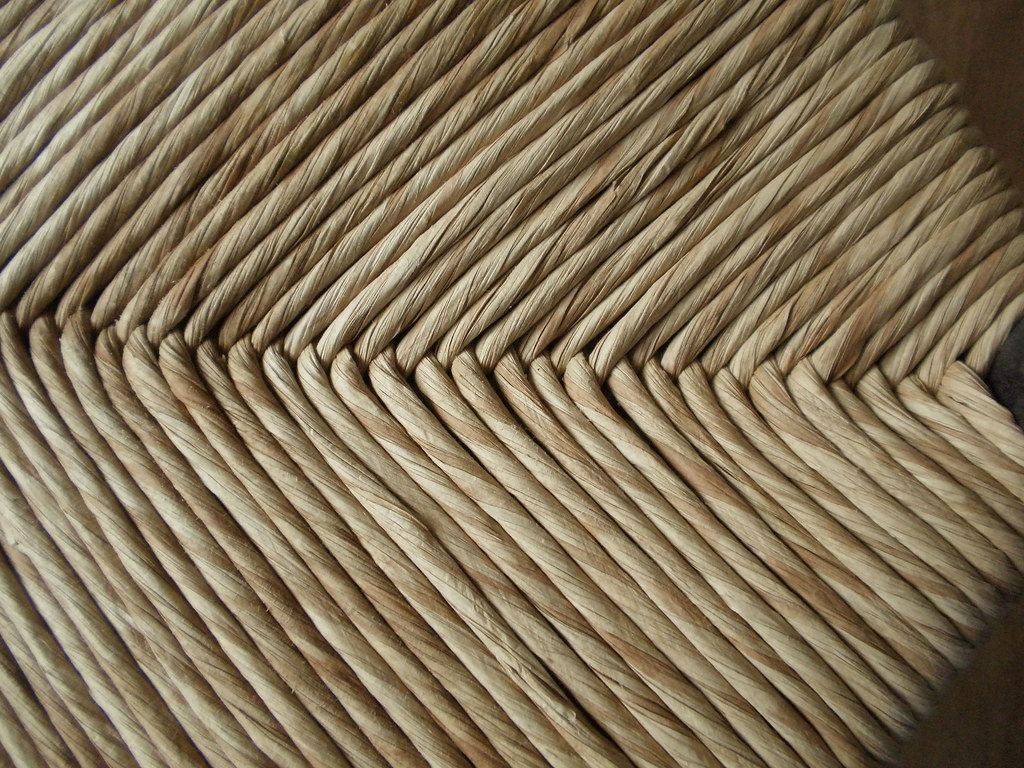
The six-way weave is built in stages: two passes of vertical strands, two of horizontal, then two diagonals that lock the whole thing into the hexagonal pattern that has been recognisable on American chairs since the 1820s.
Pell does the verticals first, top to bottom, working from the front rail backward. She uses small wooden pegs cut from poplar to hold tension at each hole while she moves to the next. The pegs come out at the end and go back into a tin she has kept since her first year of work.
Her hands are stained the same colour as the cane. She wears reading glasses on a beaded chain that her aunt made her in 1987. The aunt taught her the trade in a back room in Middlebury over the course of two winters.
There is no music in the workshop. Pell finds it distracting, she says. The only sounds on the Thursday afternoon are the scrape of cane through wood and a slow tick from a Seth Thomas regulator clock on the far wall, which she winds every Sunday morning.
The Shaker chair is harder than most because the holes are slightly oversized. Pell suspects a previous restoration in the 1950s, when someone widened them with a drill bit and packed the gap with a beeswax filler that has since gone brittle.
She removes the old wax with a dental pick and a soft brass brush. The work is fussy and adds an hour to the job. She does not bill for it. It is, she says, between her and the chair.
By four in the afternoon she has finished the second set of horizontals. The cane is beginning to lock. She runs her thumb along the underside of the seat to check tension, which she describes as the difference between a tight drum and a slack one — you feel it without looking.
She breaks for tea at four-fifteen. Earl Grey, no milk, in a chipped Wedgwood cup she found at the Williston flea market in 2002. The cup has a hairline crack running through the saucer. She has never replaced it.
The collector calls during the tea break to ask whether she has remembered the original binder cane width. She has. The binder is a wider strand — about four millimetres — that runs around the seat perimeter to cover the holes once the weave is done.
Pell finishes the diagonals before she leaves for the evening. The hexagonal pattern is now visible, faint and even. She covers the chair with a length of unbleached muslin and switches off the bench lamp.
Tomorrow she will fit the binder. The day after, she will seal the cane with a thin coat of shellac thinned with denatured alcohol, applied with a sable brush in two passes. The chair will go back to Bennington on Monday.
She estimates she has caned somewhere between eight hundred and a thousand chairs in her career. She has stopped keeping a logbook. The chairs, she says, all start to look like one another after a while, which is not a complaint so much as an observation about the limits of memory.
When she locks the workshop at five-thirty the rain has stopped. The Heidelberg downstairs is still running. She walks home along Pine Street, past the brewery and the bicycle shop, and does not look back at the building.