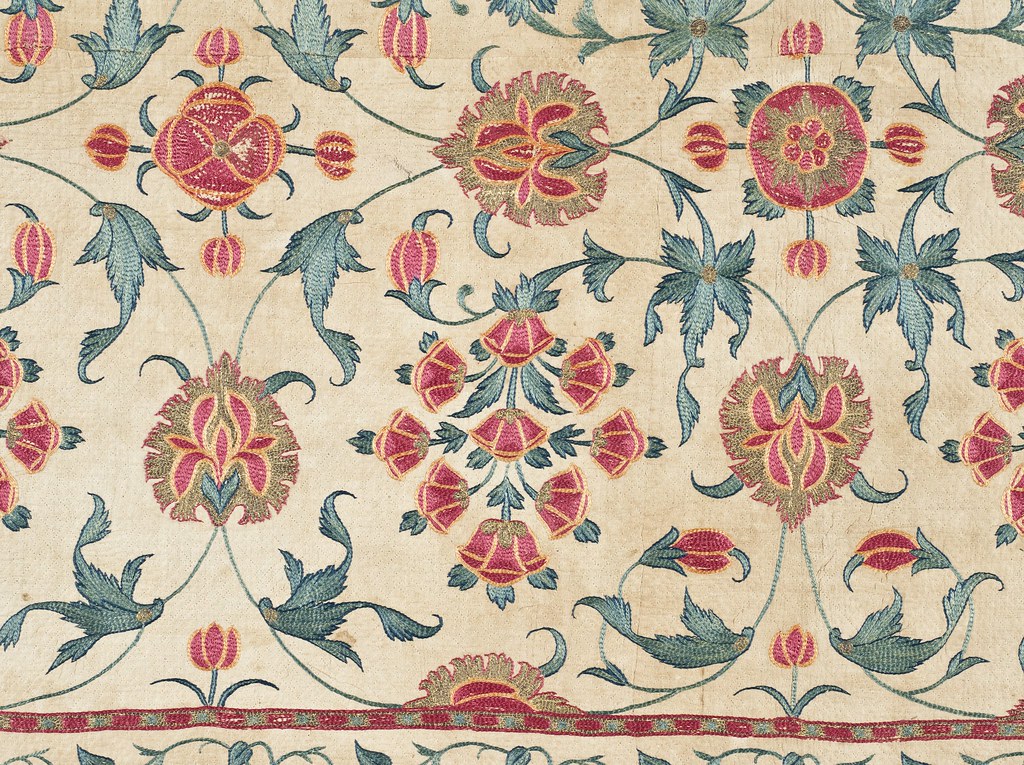
Helga Schoenfeld's quilts live in a converted bedroom on the second floor of a stone farmhouse outside Lititz, Pennsylvania. There are eighty-four of them. The oldest is a 1798 whole-cloth quilt of indigo-dyed linen, made on a farm twelve miles from where it now resides. The youngest is a 1948 friendship quilt made by a women's circle in nearby Lancaster.
Schoenfeld is seventy-six years old. She began collecting in 1979, when she bought her first quilt for twenty-two dollars at an estate sale near Reading, and she has been adding to the collection at a rate of two or three quilts a year ever since. She has never sold one.
The storage problem, for a private collection of this size, is genuine. Eighty-four quilts, properly stored, occupy considerably more space than a layperson would assume. They cannot be folded indefinitely on a shelf, they cannot be hung indefinitely on a wall, and they cannot be kept indefinitely in the cedar chest of folk memory.
The cedar chest is the most common and most damaging of the household assumptions about textile storage. Cedar oils, while they do repel some insects, also acidify over time and stain light-colored fabric. The chest itself, however well made, is rarely climate-stable. And the practice of folding a quilt to fit a chest creates fold-line damage that, over decades, becomes permanent.
Schoenfeld learned this the hard way in 1985, when she opened a cedar chest she had inherited from her mother and found that a quilt her grandmother had pieced in 1922 had developed a brown stain along every fold, and that the cotton at the fold lines was beginning to tear at a touch.
She has been studying textile storage ever since, and the room she has built for her collection — quietly, over forty years, with help from a textile conservator in Philadelphia named Esme Lindgren — is now a small and unshowy model of what private textile storage can be.
The room itself is climate-controlled. A small dedicated mini-split holds the temperature between 65 and 68 degrees Fahrenheit year-round and the relative humidity between 45 and 55 percent. The single window, which faces north, is fitted with a UV-filtering film and a heavy linen blind that is drawn during daylight hours.
The walls are painted with a low-VOC matte paint that off-gasses very little. The floor is a sealed concrete, not wood, because wood floors release acids slowly over years. The shelves are built of birch plywood that was sealed with a water-based polyurethane and then allowed to off-gas for ninety days before any textile was put on them.
Most of the quilts are stored rolled, not folded. The rolled storage method is the current best practice for any textile larger than a few square feet. A clean cardboard or polyethylene tube, four inches in diameter and slightly longer than the quilt is wide, is wrapped first in unbuffered acid-free tissue. The quilt is laid flat, face-down, on a clean cotton sheet on a long table, and the tube is rolled along the quilt's length.
Tissue is interleaved between layers as the tube rolls, to prevent the quilt's own surface from rubbing against itself. The rolled tube is then wrapped in a clean unbleached muslin cover, tied with cotton twill tape, and labeled with a small archival tag.
The rolled quilts are stored horizontally on the birch shelves, each tube in its own slot, with no two tubes touching. Schoenfeld can identify each quilt by a label on the end of the tube and a written index she keeps in a binder by the door.
Rolled storage avoids fold lines, which are the most common form of damage in stored textiles. A quilt that has been folded along the same lines for fifty years will, eventually, split along those lines, and the split is permanent.
A few quilts in the collection cannot be rolled. The 1798 whole-cloth indigo, for example, is too stiff with age to roll without risking cracks in the linen. The very oldest pieces are stored flat in custom-built acid-free boxes, with the textile laid on a smooth bed of acid-free tissue and any necessary folds padded with rolls of more tissue to soften the bend.
The boxes are stored on lower shelves, where they are protected from anything that might fall onto them from above, and where the temperature is fractionally cooler.
A small group of quilts is on rotating display in Schoenfeld's living room and dining room, one at a time, for periods of three to four months each. Display is the most damaging thing that can happen to a quilt. Light, dust, atmospheric pollutants, and the inevitable handling all take a toll. Rotating the displayed piece every few months, and giving each quilt many years of rest between exhibitions, is the conservator's compromise.
The displayed quilts are hung from a fabric sleeve sewn to the back of the quilt's upper edge, which slips over a flat wooden or aluminum bar that distributes the weight evenly along the top. Quilts hung from clips or nails will, over time, develop torn corners and stretched upper edges that cannot be repaired without significant intervention.
Schoenfeld inspects the rolled tubes once a year, in October. She unrolls each quilt, lays it on the cotton sheet, examines it for any sign of insect activity, mold, or new staining, and re-rolls it with fresh tissue if needed. The annual inspection takes her three weekends.
She has never found insect activity. This is partly luck and partly the rigor of the room's climate control. Clothes moths and carpet beetles, the two principal threats to wool quilts, are deterred by cool dry conditions and clean storage. The occasional pheromone trap is set in the room as a monitor, but Schoenfeld has not caught anything in seven years.
She has, twice in the past decade, found small areas of new staining that required attention. Both were on quilts that had been displayed and not, in her judgment, cleaned thoroughly enough after rotation. The stains were addressed by Lindgren in Philadelphia, using techniques that are well beyond what a private collector should attempt.
The collection, Schoenfeld said when I visited in late May, is something she has built so that it will outlast her. She has been in discussion with a small textile museum in Lancaster County about a bequest, and the museum has visited the storage room and judged it adequate. Most private collections of this size and age, the museum's director told her, arrive in much worse condition.
Schoenfeld was matter-of-fact about it. She did not build the storage room to be praised. She built it because she had ruined her grandmother's quilt in 1985, and she had decided then that she would not ruin anyone else's.
Filed under